


- Inmate transferred after court filing alleging toxic mold exposure
- Michigan disputes allegations, citing air quality tests showing normal mold levels
- Four inmates have died in recent months; an autopsy shows the first had blood clots
A woman at the center of a controversy over allegations of toxic mold in Michigan’s only women’s prison has been transferred to another facility after seeking relief in federal court, state officials confirmed.
Krystal Clark is now at Duane Waters Health Center in Jackson, which houses inmates with unique medical needs. Her family filed an emergency petition this week that alleged serious medical issues stemming from toxic mold at Women’s Huron Valley Correctional Facility in Ypsilanti.
Clark and others at the prison have alleged years of unsafe conditions at the prison, leading to a class-action lawsuit and calls among legislators for the resignation of the state’s top prison official.
In recent months, four inmates have died — and corrections officials on Thursday released an autopsy report for one of them, Khaira Howard. The 28-year-old died on May 13, two weeks after she was due for parole.
Related:
- Michigan prisons leader defends oversight of women’s prison after 3 deaths
- Deaths at Michigan women’s prison spur calls for Whitmer to act, director to resign
- Advocates seek clemency for prisoner allegedly sickened by mold
- Mold, medical failures alleged at Michigan women’s prison
The autopsy revealed she died of a blood clot that blocked an artery to her lungs and suffered from a heart condition that left fluid in her lungs.

The report concluded that there was no evidence of “significant acute or recent trauma” and that her weight was a contributing factor to her death.
Clark, meanwhile, was transferred after saying she suffered from respiratory issues, ear infections and hearing loss so acute that she needs an assistive-listening device for telephone conversations.
The Michigan Department of Corrections said Clark’s placement is temporary but she will remain there until the motion is resolved.
Corrections officials dispute her account, issuing a statement asserting that she is “not experiencing any emergent medical condition.”
The 42-year-old has been at the prison since 2011, when she was sentenced to 17-30 years for armed robbery and other charges. She will be eligible for parole after May 9, 2027.
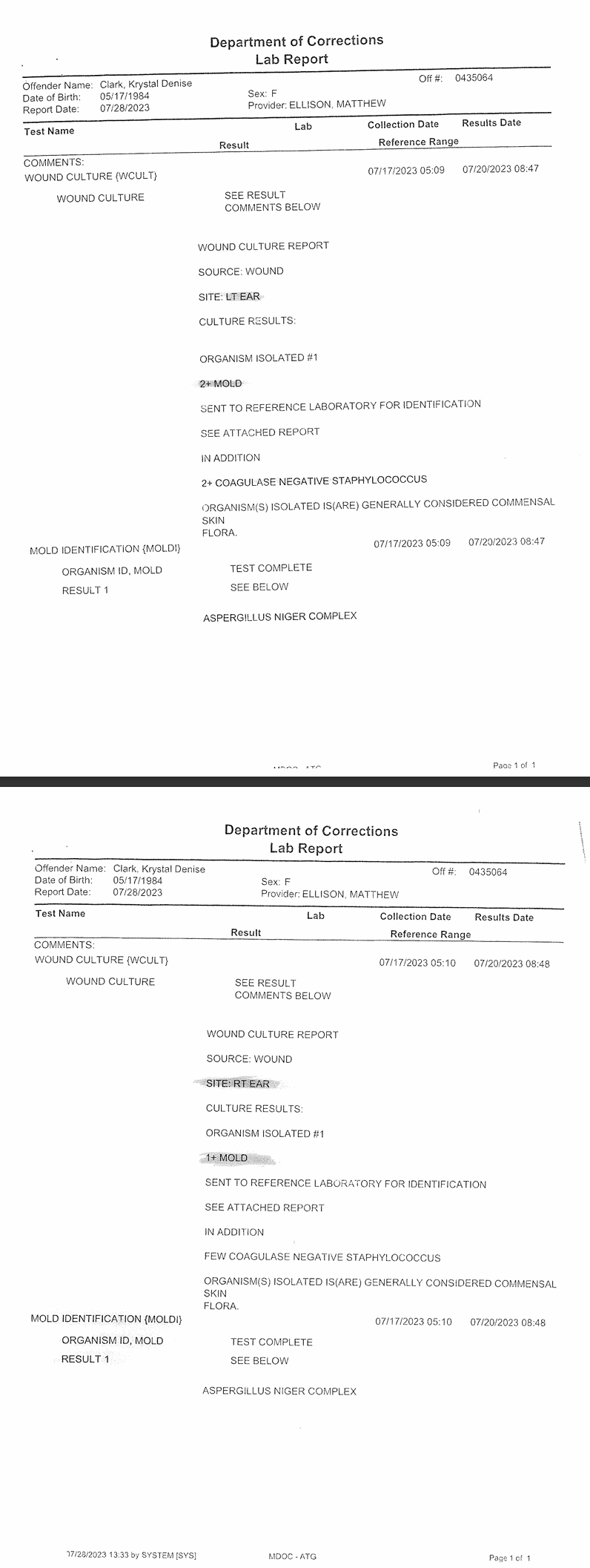
Her medical record indicates that she tested positive for Aspergillus niger, a common black mold typically found in moist, damp areas in July 2023. She also tested positive for S.marcenses, Klebsiella, and Haemophilus, bacteria all linked to exposure to black mold.
The state has repeatedly denied the presence of black mold at the prison, pointing to reports and testing that levels of fungal spores were safe and “only marginally above the outdoor(s.)”






You must be logged in to post a comment.