


- Mike Rogers, Abdul El-Sayed making appeals to unconventional voting blocs, shoring up their bases ahead of Nov. 3 election
- Rogers bullish about his chances among Black and Jewish voters, while El-Sayed is coming for disillusioned Trump voters
- In what’s expected to be a close race, small shifts among any demographic could make or break either candidate’s chances, observers say
DETROIT — Republican Mike Rogers claims he’s got an ace up his sleeve in Michigan’s fiercely competitive US Senate race — an “untraditional” coalition of voters concerned enough about Abdul El-Sayed and the direction of the Democratic Party to buck national trends.
“Democrats for Rogers” is the “fastest-growing” coalition for his campaign, Rogers told reporters after Wednesday night’s debate. “Something is happening there, and nobody wants to pay attention to it. But I think there’s something to this, and it’s real.”
Rogers is hoping to capitalize on divides in the Democratic base after El-Sayed’s primary win over US Rep. Haley Stevens left a majority of Michigan’s Black and Jewish Democrats with a general election candidate they hadn’t supported.
El-Sayed scoffs at the suggestion Rogers will make serious inroads with Democrats, arguing he has paid little more than lip service to Detroit voters.
Related:
- Fact check: El-Sayed, Rogers debate trade, money, immigration, more
- Mike Rogers, Abdul El-Sayed pitch competing economic plans
- El-Sayed sets Michigan fundraising record. See who’s contributing
But El-Sayed, too, is making overtures to voters not historically inclined toward his party: people who supported President Donald Trump in past elections but still feel left behind by the government he had promised to change.
“He’s not serious about building a real coalition,” El-Sayed said of Rogers. “Our coalition is going to be anybody who has felt locked out by their politics and wants those politics to be unlocked for them.”
Ten years after Trump first won Michigan by courting union workers and disaffected voters, both El-Sayed and Rogers are again appealing to unlikely voting blocs as they attempt to piece together their own winning coalitions.
It’s too early to tell whose strategy will pay off in one of the most closely watched elections in the country, which could be the deciding factor in which party controls the US Senate for the last two years of Trump’s term.
Both candidates are spending time in the final days of the election cycle shoring up support among their respective party bases. El-Sayed campaigned this week with US Sen. Raphael Warnock of Georgia and on Saturday will rally with former President Barack Obama in Detroit, where Rogers has been spending considerable time.
Rogers may appear with Trump at a Sunday rally in Port Huron and is also headed north for stops in the Upper Peninsula and northern Michigan, traditionally GOP areas where El-Sayed recently drew large crowds.
In a race that’s expected to be close, “small, little shifts in…groups that are part of either coalition could make a difference,” said David Dulio, a political science professor and director of Oakland University’s Center for Civic Engagement.
Here are some of those key voting groups that could play an outsize role in choosing Michigan’s next senator.
Black voters
Voters in Detroit care about many of the same issues as the rest of the state: high costs of living, healthcare access, housing affordability and fixing the roads, said I’Ron Wilson and Joshua Whitney, casino workers who have been canvassing the city on behalf of the UNITE HERE Local 24 labor union, which has endorsed El-Sayed.
But when it comes to who those voters will back – or if they’re voting at all – the conversations can get trickier.
“They go off what they see on television, or they go off the nationality or the color they see,” Wilson told Bridge this week. Though many people at the doors have been open to conversations, he said, “we’ve still got a lot of way to go.”
El-Sayed did not perform particularly well with Black voters in the primary. Of the 12 Michigan counties with at least 133,000 residents and a Black population of 11%, Stevens won seven by an average of 8.5 percentage points, including Wayne, Saginaw and Genesee counties.
Stevens won Detroit with more than 60% of the vote, making El-Sayed the first Michigan Democrat to win a statewide primary without winning the state’s largest city since the 2018 primary, when now-Gov. Gretchen Whitmer narrowly lost the city to Shri Thanedar.

Rogers has been attempting to appeal to Stevens’ voters. In August, he unveiled a Democrats for Rogers coalition, led by former state Rep. Karen Whitsett, an elected Democrat who frequently aligned with Republicans in the Legislature. More recently, Rogers’ wife handed out $10 gift cards at a Detroit gas station.
Adrian Hemond, a Democratic strategist with the Grassroots Midwest consulting firm in Lansing, likened Rogers’ campaign strategy to that of his onetime opponent Elissa Slotkin, a Democrat who narrowly defeated him in 2024’s US Senate contest: “Lose by less in the places you’re going to lose.”
For El-Sayed, the two biggest questions will be whether Black voters turn out in high numbers and whether they ultimately vote for him.
“He’s going to lose some number of Black voters…and he needs to make that up somewhere else,” Hemond said. “Can he remake the Democratic coalition in Michigan in his image?”
Many prominent Black officials have endorsed El-Sayed and have downplayed concerns about voter enthusiasm. Terrell George, president of the Local 24 union, said Rogers’ message is not what they’re seeing play out when knocking on doors in Detroit.
“That is a false narrative,” he said. “He may have three or four Black people behind him and say this is a coalition, and it’s not.”
There are about 1.4 million Black residents in Michigan. They accounted for about 11.5% of all Michigan voters in 2024.
Anti-establishment voters
Trump isn’t on the ballot this cycle, but Democrats believe high prices for gas and other goods will make the November election a referendum on the president and Republicans aligned with him.
El-Sayed is hoping to capitalize on those national headwinds by adopting what some observers told Bridge is a Trump-like strategy: create political realignment by appealing directly to voters who feel disillusioned by their government. He’s adopted Trump’s “America First” slogan and recently spent time in the Upper Peninsula and rural Michigan, typical Republican strongholds.

“Trump got those folks because he went there and talked to them in ways that they hadn’t been talked to in years,” said Dulio, the Oakland University professor. “That goes a long way. Just showing up there is important.”
A September New York Times/Siena poll found El-Sayed is outperforming other swing state candidates among former Trump voters on issues like healthcare and the economy.
Both candidates are fighting for non-college-educated white voters, an essential part of Trump’s winning Michigan coalitions, said Michigan pollster Richard Czuba.
“On the Republican side, it is essential to their coalition if they want to win,” Czuba said. “If El-Sayed starts picking off non-college voters, this is a really bad sign for Republicans.”
Rogers, a onetime Trump critic who aligned himself closely with the president in the 2024 cycle and the 2026 primary, has since distanced himself from some of Trump’s less popular policies like Canadian tariffs and the Iran War while refraining from outwardly criticizing the president.
On Wednesday, he told reporters that his relationship with Trump makes him uniquely positioned to push back on certain policies.
“President Trump’s going to be here two years, like it or not,” Rogers said. “We can send somebody back that’s going to gouge his eyes out, or somebody like me who’s already stood up to the president on issues that I think are important.”
Jewish Democrats
Rogers has actively reached out to Jewish Democrats, playing into concerns that flared up during the primary about El-Sayed’s rhetoric around Israel and AIPAC, as well as his association with controversial figures like Twitch streamer Hasan Piker.
Despite the disagreements many Democrats have with Trump and his policies, “for the future, for the long term, it’s much better for Mike Rogers to win this election,” Rabbi Asher Lopatin of Huntington Woods said at one campaign event, arguing El-Sayed has “shown contempt for the Jewish community.”
Many members of the Jewish community also remain offended by El-Sayed’s comments following the attack on Temple Israel in West Bloomfield this spring. Following the attack, which left the perpetrator dead, El-Sayed said that there was no justification for the attack but added that “hurt people hurt people.”
Rogers has “clearly made really incredible inroads into the Jewish community,” said longtime Republican consultant Stu Sandler, predicting that the community’s tendency to vote anywhere from 70% to 80% Democrat will be “inverted” in the US Senate race.
El-Sayed has apologized for earlier comments and has worked to address those concerns, at one point saying his commitment to Jewish safety equals that of his commitment to the safety of his own daughters.
But “I think people recognize it’s insincere,” Sandler said.
Some Jewish Democratic officials, including US House candidate Jeremy Moss and Lansing Mayor Andy Schor, have publicly opposed Rogers but stopped short of endorsing El-Sayed, citing ongoing concerns.
But others have encouraged their community members to support El-Sayed in the election, including former US Rep. Sandy Levin, who said he has “some significant disagreement” with El-Sayed on foreign policy matters but aligns with him on other issues and believes Trump is “an existential threat to our democracy.”
Democratic-aligned groups have also financed targeted outreach to Jewish voters through direct mailers in support of El-Sayed.
Asked Tuesday about the potential for historically Democratic voters to back Rogers, El-Sayed downplayed concerns.
“For some folks, other issues that we disagree on are going to be bigger than the issues we agree on,” El-Sayed said. But if voters’ top concerns involve the Trump administration, clean air and water, reproductive rights and healthcare, he said, “I’m the only one fighting on those fronts.”
There are an estimated 105,000 Jewish adults in Michigan, about 1.4% of the electorate, according to Brandeis University researchers.
Arab Americans
El-Sayed, who if elected would become the first Muslim US Senator in the nation’s history, has faced unrelenting attacks from Trump, Rogers and other conservatives over what they claim are connections to the Muslim Brotherhood, a transnational Islamic organization that advocates for political systems entwined with Islamic law.
El-Sayed has publicly disavowed the group and distanced himself from reports that members of his family may have ties to the group. In Wednesday’s debate, he called Rogers’ continued attacks “quite shameful.”
Rogers told reporters after the debate that he disagrees with Islamophobia, but said he and Muslims affiliated with his campaign are worried about the ideology of the Muslim Brotherhood “creeping this way.”
Trump has gone further, frequently referring to El-Sayed as “Mohammed El-Sayed,” in one video calling him a “Muslim radical” and “Muslim Brotherhood member, even though he denies it.” He’s also at several points called El-Sayed a “jihadist.”
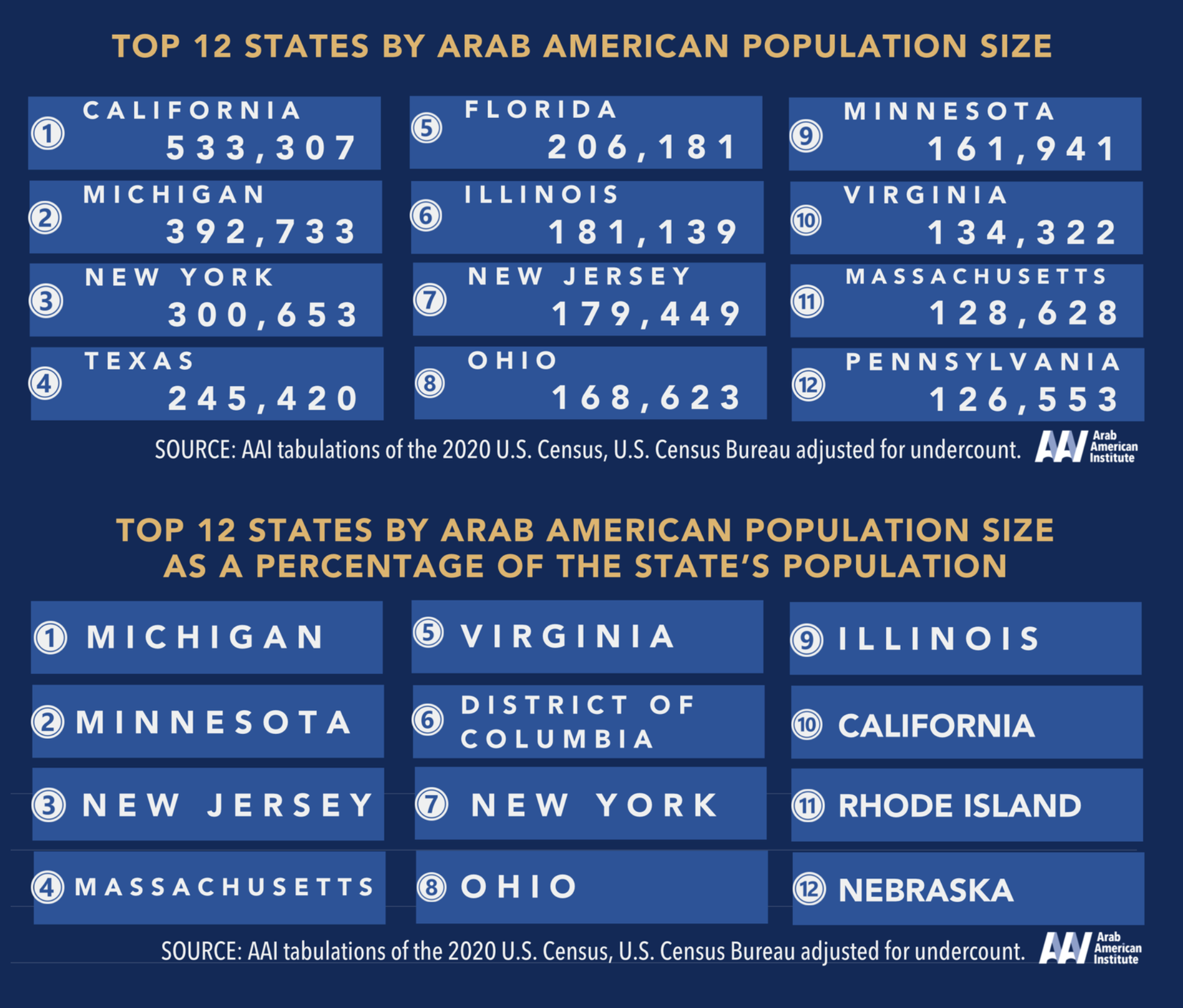
Michigan is home to close to 400,000 Arab Americans, according to the Arab American Institute, many of whom still have family in the Middle East. An estimated 200,000 of those residents are registered to vote.
Those voters were once reliably Republican, but discrimination after the 9/11 terrorist attacks and the war in Iraq changed that and swiftly shifted many toward Democrats.
In 2024, however, many Arab Michiganders displeased with the Biden administration’s handling of the war in Gaza took out their frustrations at the ballot box, both in the form of the “uncommitted” movement during the primary and eventual support for Trump in the general election.
But the recent rhetoric against El-Sayed has made many prominent Arab American leaders uncomfortable, even some who supported Trump in his winning 2024 campaign.
“Any attack based on a person’s religion is not acceptable,” Bishara Bahbah, who helped lead Trump’s outreach in Michigan in 2024, told the Associated Press, calling El-Sayed “as American as they come” and adding the president’s comments have crossed a “red line.”
Young voters…
El-Sayed is banking on youth enthusiasm to boost his campaign, spending considerable time on college campuses and working to stay relevant to younger voters.
Part of that strategy is his campaign’s prolific social media use. From Taylor Swift dances to a Love Island parody and a nod to Michigan native Tim Robinson’s show “I Think You Should Leave,” El-Sayed is attempting to translate meme culture into meaningful policy discussions and votes.
“In this race, we made a point to make sure that our politics represents authentically the challenges that younger people are facing,” El-Sayed told Bridge Michigan in a March interview.
Rogers reportedly acknowledged at a recent Grand Rapids event that the El-Sayed campaign is doing a “good job” on college campuses: “It’s a little scary, but we’re working on it.”

Voters ages 18-24 have historically had the most fickle turnout of any age demographic, though state election officials and Tufts University researchers note youth turnout has been on the rise in recent cycles.
In 2016, a surge in youth voting helped propel progressive US Sen. Bernie Sanders — a key El-Sayed ally who will campaign for him in Michigan again next week — to victory in the state’s 2016 presidential primary.
Youth support for the Democratic ticket softened in 2024 amid frustrations over economic conditions, inflation and the US government’s involvement in the Israel-Hamas war, Marty Jordan, director of the Master of Public Policy program at Michigan State University’s College of Social Science, said in an email.
Whether Gen Z voters remain a reliable Democratic constituency will be a “defining factor” in 2026, Jordan said.
“These voters are grappling with a distinct set of priorities, ranging from the cost of living and housing affordability to the implications of generative AI on the labor market,” Jordan said. “Many young people are signaling a demand for leadership that moves beyond traditional party orthodoxies.”
Michigan is home to about 937,000 residents ages 18-24. Not all are registered to vote, and many who are often do not cast ballots.
…and older voters
Rogers, meanwhile, has consistently held the advantage among Michigan’s seniors, a voting population that reliably shows up to the polls.
An August poll from AARP Michigan showed Rogers with a comfortable lead among voters aged 50 and over.

That lead grew among older swing voters in the survey, which showed Rogers leading El-Sayed among independents by 33 points. Democratic gubernatorial nominee Jocelyn Benson wasn’t dealing with the same issues, posting a double-digit lead over John James among the same group of older swing voters.
“I think that the older voters are definitely going to be the heavier influence in this election, no doubt in my mind,” Rogers told the Detroit Free Press last month. “They’re gambling that they’re going to have a (huge) turnout of the youth vote.”
Rogers has campaigned heavily on being the less “extreme” candidate in the race, pitching himself as a moderate who will make policy choices based on how much it helps or hurts Michigan. His healthcare policy plan focuses on lowering prescription drug costs and offering increased price transparency.
There are nearly 4 million Michigan residents age 50 and older. They accounted for about 60% of statewide voters in 2022, according to the AARP.
El-Sayed has attempted to reach older demographics through advertising, incorporating his grandparents and personal faith in campaign messaging. He’s also worked to differentiate himself from his opponent on issues that matter to seniors, in particular framing himself as a staunch advocate for Social Security and affordable, accessible healthcare.
Czuba, the pollster, said that outreach might help El-Sayed get through to some seniors skeptical about his candidacy.
“He is trying to make up ground with those older voters who are distrustful,” Czuba said. El-Sayed’s ad addressing his faith, in particular, is “a pretty effective flip of the anti-Muslim attack,” he added.






You must be logged in to post a comment.