


- An estimated 75% of Michigan’s rivers and streams are tainted with elevated levels of fecal pollution
- The waste pours of farmland and out of sewers and leaking septic systems, risking the health of swimmers, paddlers and anglers
- State lawmakers have taken little action amid funding concerns and disagreement about whether Michigan should tighten regulations
Rachel Cuschieri-Murray loves the Grand River, which she calls a “precious gift.” The state’s longest river flows 252 miles from Hillsdale County, past farm fields and the state Capitol before emptying into Lake Michigan.
But she wouldn’t dare swim in the stretch that flows by those halls of power where lawmakers decide Michigan’s most important issues.
“You shouldn’t even put your hands in,” said Cuschieri-Murray, whose duties as executive director of the Eaton Conservation District include caring for the Grand.
“It’s that dirty.”

If lakes are the heart of Michigan, its 76,000 miles of rivers and streams are its arteries and pulse, connecting communities, sustaining wildlife and feeding the Great Lakes.
Bridge Listens: See how you can get involved
What you should know
Fecal-contaminated rivers expose Michiganders who swim, boat, or fish to bacteria, viruses and parasites from sewer overflows, farm runoff and failing septic systems. The contamination likely sickens thousands of people each year and can depress tourism and home values.
Who's making public decisions
The Michigan Legislature and EGLE hold the key authority over septic rules, farm manure regulation and enforcement, while local municipalities work to make sewer upgrades.
Ways to participate
- Look up your state lawmakers on the state House Natural Resources and Tourism Committee →
Contact state representatives who work on the environment. - Look up your state lawmakers on the state Senate Energy and Environment Committee →
Contact state senators dealing with environmental issues. - Attend the Grand Traverse County Board of Public Works meeting →
The board meets the second Thursday of the month at Garfield Township Hall, and its verified agenda includes well and water tank inspections, sewer pump station upgrades for several townships, and a state violation notice over a sewage overflow. - See the DWSD’s upcoming meetings →
The story names the DWSD. We do not list its meetings yet, so check its own schedule for the next one. - Look up EGLE water quality reports →
What to watch for next
Are you taking action? Let us know.
Powered by Civic Action Toolbox
And many are in deep trouble.
Despite federal mandates to ease pollution, an estimated 3 in 4 Michigan rivers and streams are so befouled by feces they don’t meet water quality standards meant to keep swimmers and anglers safe. Legislators for years have done little as the problem got worse, fueled by manure runoff from large-scale farms and leaks from tens of thousands of home septic systems.
The pollution does more than tarnish the Pure Michigan image. It violates the Clean Water Act and likely sickens thousands of swimmers, boaters and anglers a year from exposure to bacteria, viruses and parasites.
“It’s just wild to me that this would be OK,” Michigan Environmental Council Water Policy Director Megan Tinsley said.
“And it seems to be OK with a great many of our decision-makers.”
Republican and Democratic lawmakers agree pollution is a problem, but disagree on solutions and where it ranks in the state’s long list of priorities.

While environmental groups think state manure pollution regulations are too lax, the livestock industry has sued to block their enforcement. Money remains a perpetual obstacle, preventing cities from making repairs to leaky sewers and stopping lawmakers from requiring people to fix their failing septic systems.
The inaction threatens to undermine investments taxpayers have made to reclaim Michigan’s rivers, including billions spent to dredge contaminated sediment, restore habitat and replace derelict factories with waterfront parks.
“Ultimately, a polluted environment is not going to allow for economic growth and it’s not going to allow for health and wellness,” said Joan Rose, a Michigan State University microbiologist who has extensively studied the problem.
Awash in waste
The more regulators look for fecal waste in the water, the more they find.
The state has so far tested roughly half of Michigan’s rivers and tributaries for E. coli, a gut bacteria regulated under the Clean Water Act as a proxy for fecal contamination.

The vast majority exceeded levels deemed safe for swimming. In more than half, levels are often too high even for even partial body contact activities, like paddling or wading.
Based on results so far, an estimated 75% of Michigan’s rivers and streams likely exceed state limits for fecal contamination, said Molly Rippke, who leads E. coli testing for the Michigan Department of Environment, Great Lakes and Energy.
That doesn’t necessarily mean they’re always polluted. Water quality fluctuates over time and most waterways aren’t routinely sampled.
Still, Ripple said the numbers do “not look pretty.”
How much is too much?
Michigan attempts to protect public health by limiting the number of allowable E. coli per 100 milliliters of water (just under a half cup). The state limits are:
- Full-body swimming: No more than 300 E. coli at any given time, and a mean of no more than 130 E. coli across multiple samples during a 30-day period
- Partial-body contact (paddling, wading, fishing): No more than 1,000 E. coli at any given time
The pollution spans the state, from small creeks to parts of major rivers like northern Michigan’s Boardman and Pere Marquette, mid-Michigan’s Tobacco, southwest Michigan’s Kalamazoo and the Rouge in metro Detroit.
The risks extend to the state’s lakes, causing bacteria-related closures or advisories at dozens of beaches every summer.
It’s difficult to directly compare Michigan to its neighbors, because states vary in monitoring and levels of bacteria deemed unsafe.
But fecal pollution is widespread. In Indiana, 74% of assessed river miles exceed regulatory limits. In Illinois, the figure is 83%. Nationally, a recent study from Environment America found elevated bacteria levels at 69% of monitoring locations across 17 states.
The situation frustrates river lovers like AJ MacArthur, a Kalamazoo resident who founded the paddling club Michigan River Rats. He blames a culture of environmental neglect that also fuels the PFAS crisis and littering.
“It’s just beyond me,” MacAthur said. “We’re supposed to be known for our water.”

The dirtiest waterways tend to be small tributaries in the southern half of the Mitten, where livestock farms, failing septic systems and sewage dumping cause widespread problems.
Among them: the White River in the Thumb, the north branch of the Salt River near Coleman, the Red Run drain in Warren and various tributaries of the Flint, Grand and Raisin rivers.
As those tributaries flow into bigger rivers, the waste gets diluted — but not always enough to eliminate health risks. Goose droppings, dog waste and sewer overflows add to the toll as rivers wend through suburbs and cities.
“We don’t have a whole lot of choice other than be reactionary,” Flint Environmental Compliance Supervisor Tiffany Minder said of the city’s struggles with sewer backups during rainstorms. “Our infrastructure is 100 years old.”
Disgusting and dangerous
More than just gross, waste-laden water is dangerous.
Accidentally swallowing it can expose a person to a long list of pathogens, from E. coli and cryptosporidia to norovirus, giardia and hepatitis. Fever, diarrhea and vomiting are the most common symptoms, but some infections spiral into severe illness or lasting organ damage.
“We’re really just beginning to break the ice on what the long-term consequences of those infections are,” said Dr. James M Fleckenstein, a Washington University School of Medicine professor who studies E. coli.
“But generally, we know that contaminated water is not a good thing.”
When met, Michigan’s water quality standards are supposed to limit the number of people sickened to a handful out of every 1,000 swimmers.
The greater the exceedance, the greater the risk.
Is my river safe?
Click the link below to view a map of tested waterways. Zoom in on your community to see test results.
State statistics show at least 12.4 million people spend time on Michigan’s rivers and 30.7 million swim at the state’s beaches each year, but nobody tracks how many are sickened by fecal pathogens during the experience.
People usually fight off the resulting stomach bugs at home, Fleckenstein said, perhaps wrongly blaming food poisoning or a seasonal illness.
However, estimates from the US Centers for Disease Control and Prevention suggest the nationwide toll could top a million. A separate study, from researchers at the University of Illinois and Indiana University, reached a far higher estimate of 50 million annual gastrointestinal illnesses associated with lakes, rivers and ocean beaches.
As the 10th most populous state and a place known for its water, Michigan likely has a higher percentage, said Matthew Sims, a physician researcher specializing in infectious diseases at Corewell Health.
Sims and his colleagues see patients with signs of such illnesses “all the time.”
“If somebody says we went camping, if somebody says we drank stream water, river water, whatever: We know there’s potential issues,” Sims said.
Beyond harboring disease, fecal pollution can overload the water with nutrients that cause toxic algae blooms and oxygen-depleted dead zones where fish can’t survive.
It inflicts an economic toll in the form of missed workdays, medical bills, reduced tourism and depressed real-estate values.
One Michigan-based study found waterborne E. coli outbreaks diminished home prices by an average of $13,000 when a sale coincided with an outbreak.
“Why would people want to continue to come here if over half of our waters are out of compliance for swimming?” said Tinsley, the Michigan Environmental Council water advocate.
MacArthur, the Kalamazoo paddler, follows a strict routine to minimize his exposure: No swimming. Wear rubber boots when launching or landing. Keep your hands away from your mouth. Shower immediately upon returning home.
“There are ways around it,” he said of the health risks. “But it’s unfortunate that we have to even think about that.”

Lawmakers agree on problem, not solutions
Legislative leaders on both sides of the aisle call the pollution unacceptable for a state so rich in water resources.
But they are split on how to address it and have focused little attention to doing so in recent years.
Rep. Mike McFall, D-Hazel Park, blamed the lack of urgency on the influence of polluting industries that see tighter regulations as a threat to their profits, and have the money to sway policy through lobbying and campaign donations.
“They’re out for their own self-interests,” McFall said. “That plays a role in a lot of the legislation in Lansing.”
Sen. Roger Hauck, R-Mt. Pleasant, attributed the inaction on Michigan’s pollution issues to a fear of tightening regulations without providing money to help people comply.
Supporting bigger fixes for septics, sewers or farm pollution would cost money the state can’t afford, he added.
“Unfortunately, we’re broke,” Hauck said.
Lacking more authority to proactively prevent pollution, the state environment department is left to hunt down violators one by one.
It’s a big job. And the state has just one full-time employee to monitor river E. coli.
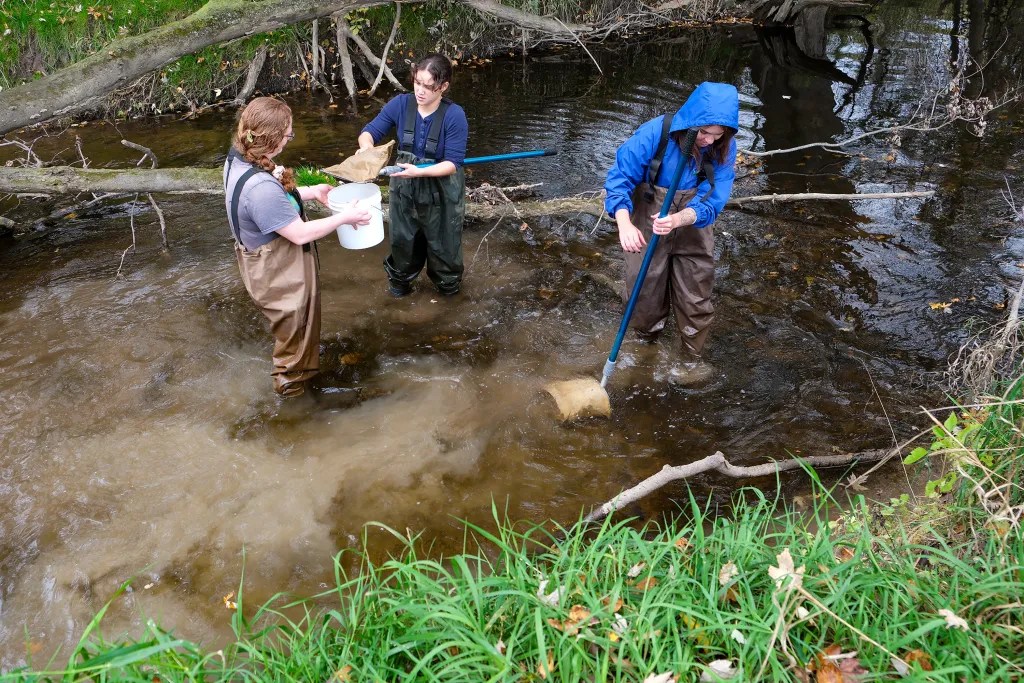
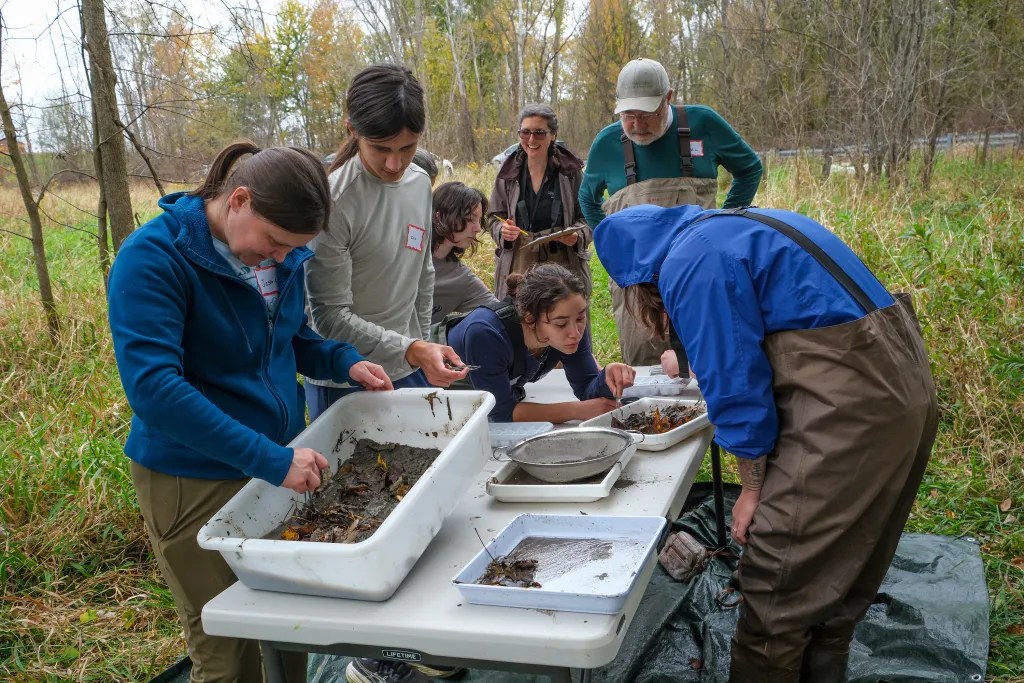
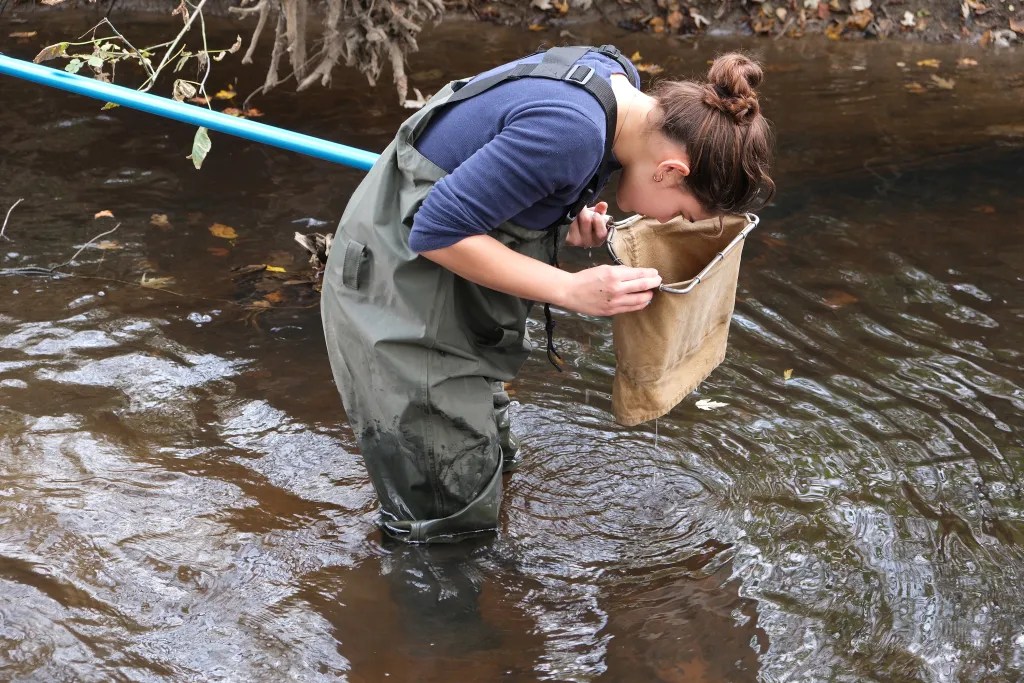
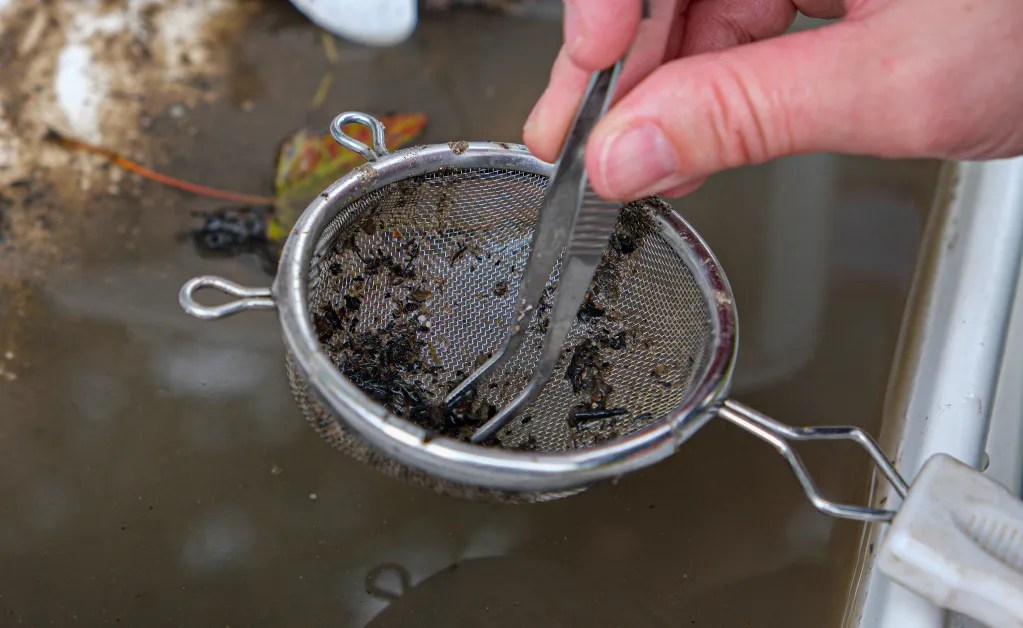


Click on the images for more caption information
So the state turns to local groups like Cuschieri-Murray’s Eaton Conservation District for a gentler approach.
The groups encourage people to pick up dog waste, promote septic system maintenance and help farmers buy fencing to keep livestock out of streams. But they get little state support for the cause — $40,000 apiece in annual operating cash, plus whatever grants they manage to secure.
Cuschieri-Murray is left with big ideas about how to clean up the Grand, but little ability to pursue them. Given the choice to clean up water through regulations or through adequate support for voluntary fixes, Michigan has chosen neither.
“It should be nonpartisan, right?” she said. “We all need water to survive. We all need our natural resources to be as healthy as possible, so that we can be healthy.”
At the current rate of progress, the state’s Rippke doesn’t expect Michigan to solve its problems with feces-tainted rivers in her lifetime.
The upshot for the public?
“More people are going to get sick,” she said.
Fecal pollution in Michigan rivers
E. coli levels vary based on location and timing, meaning different stretches of the same river can have vastly different pollution levels. Here’s where things stand in Michigan’s five biggest cities.
Detroit: The Detroit River is within regulatory limits, but the Rouge River exceeds limits for total body contact (swimming) and often partial body contact (paddling, wading and fishing).
Grand Rapids: The Grand River in downtown Grand Rapids exceeds total body contact standards but is usually safe for partial body contact. Urban creeks that feed the Grand are in worse shape.
Warren: The Red Run River – which has largely been repurposed as a stormwater and sewer drain – exceeds total body contact standards and often exceeds partial body contact standards. Bear Creek is similarly impaired.
Sterling Heights: No tested water bodies in Sterling Heights meet water quality standards for swimming. The Clinton River, the city’s largest waterway, is occasionally out of compliance for partial body contact too.
Ann Arbor: The Huron River meets water quality standards upstream of Gallup Park. Areas downstream of the park do not meet the total body contact standard.
Thank you to our Michigan Environment Watch sponsors



Bridge Michigan Environment Watch is made possible by generous financial support from our sponsors. Sponsorship supports our independent journalism mission but does not constitute sponsor endorsement of individual articles or editorial content. Bridge Michigan journalism remains fact- and data-driven and independent at all times.
Please visit the About page for more information and to subscribe to Environment Watch. Interested in becoming a sponsor? Contact Emma Carr.


You must be logged in to post a comment.